Showing posts with label Monica Swindle. Show all posts

Tuesday, September 2, 2014

O'Connor on "A Good Man Is Hard to Find"

Flannery O'Connor, "On Her Own Work," in Mystery and Manners: Occasional Prose, edited by Sally Fitzgerald and Robert Fitzgerald, Farrar, Straus and Giroux, 1969, pp. 107-18.

[O'Connor delivered the following remarks at a reading she gave at Hollins College, Virginia on14 October 1963. In introducing her "A Good Man Is Hard to Find," O'Connor touches upon the function of violence and the grotesque in her fiction, especially in relation to the characters of the Grandmother and the Misfit in the story.]

Read More »

Tuesday, August 26, 2014


Hello scholars and welcome to Week 2 of ENG 206 (American Lit. After 1945). I really enjoyed reading everyone's introductions last week, and I think we are going to have a fun semester! I just wanted to check in and see how everyone is getting along with the class and remind you of the assignments for this week. Don't worry if you have some reservations about the technology still; it takes a little getting used to, but I am always here to help. We will figure it out together! 

Read More »

Thursday, August 21, 2014

EXAMPLE BLOG POST: That last line...

The last line of Randall Jarrell’s brief poem “The Death of a Ball Turret Gunner” took an incredibly striking and powerful turn from the tone and imagery earlier in the poem. I found the first few lines a little confusing, so I am going to leave those for my next post.  (If you have any ideas about what’s going on there, a comment would be much appreciated.) I didn’t realize the speaker was dead until the last line “When I died they washed me out of the turret with a hose,” which made the poem a lot more haunting (a dead soldier talking!).  We don’t see actually see him die; instead, we first wake up from an image of comfort: “From my mother’s sleep,” sleeping with his mother, into this horrible world in the belly of an airplane (the note really helped me figure out what was going on).  Jarrell writes, “I woke to black flak and the nightmare fighters.”  The rhyme, “black flak” sounds hard, almost like shots fired from a gun, and the image created is truly one of a nightmare, a sky turned black with anti-aircraft bombs (flak) exploding all around, while this soldier huddles in this bubble underneath the airplane getting shot at.  The reader doesn’t actually see him die; there’s no heroic battle or a picture of him going nobly to his death.  We only get to see the aftermath, and Jarrell states this line so matter-of-factly: “When I died they washed me out of the turret with a hose,” no embellishment at all.  The language is as practical and efficient as the action of the unnamed “they” (a stand-in for the State?  The people in charge in the government sending these young men to war?) callously hosing the speaker’s blood from the bomber, presumably to be replaced by yet another speaker, another boy sent off to die in the war.  The poem is sort of dreamy at the beginning, but then this last line is so direct, plain even, it is shocking to read, which, I imagine, was what Jarrell wanted, to show how graphic and shocking war is!  Did you have the same reaction to the last line?  Did it sound different from the rest of the poem to you?  
Read More »

Example Blog Post: Researching Jarrell

HERE IS A SAMPLE BLOG POST FOR THE POEM "DEATH OF A BALL TURRET GUNNER" BY RANDALL JARRELL SO YOU CAN SEE AN EXAMPLE OF WHAT AN ACADEMIC BLOG POST ABOUT A PIECE OF LITERATURE MIGHT LOOK LIKE.  THERE WILL ALSO BE SOME DISCUSSION PROMPTS IN THE PRESENTATIONS TO HELP YOU IF YOU GET STUCK ON WHAT TO WRITE ABOUT EACH WEEK.

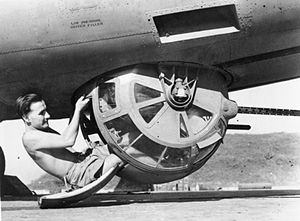
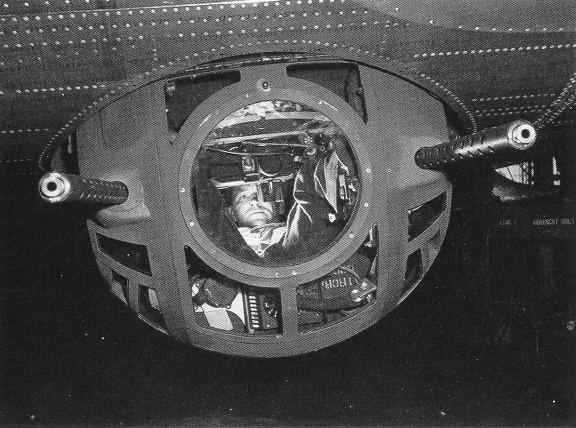
In order to help make sense of this poem, I thought it might be helpful to know a little more about the author and see what a ball turret gunner actually looks like.

I found some interesting commentary on the author Randall Jarrell on an academic site called "Modern American Poetry."

David Perkins writes: "… During the war [Jarrell] served in the air force, though not as a pilot. By 1942 he had published two collections of poetry. The preface to the first (1940) confessed his wish and failure to replace Modernism with something else. At the air base he listened to the stories of the pilots and read newspaper war reports and out of these materials he composed, in Little Friend, Little Friend (1945) and Losses (1948), what remain for many readers the finest "war" poems of our time. They are vivid and moving incidents of combat, told with an exceptionally sensitive psychological insight and moral perplexity. And the emotions of Jarrell’s pilots were in some ways unfamiliar in the literature of modern war. He expresses the pity and protest typical of the better poets of the First World War, the shock, horror, weary resignation and sense of doom common in war poetry, but also a nexus of other feelings; they do not belong just to Jarrell (or to[W. H. ] Auden, whose perceptions helped form Jarrell’s in these poems), or just to the Second World War, but persist to the present moment. The planes have more reality, more identity than their crews ("A Front"). Enclosed in machines in remote sky, the pilots are psychologically detached from the deaths they distribute and fall toward. They are murderers who are likely themselves to be murdered, yet also passive, helpless, and innocent ("Eighth Air Force"). In short, in his pilots Jarrell expressed the feelings of alienation, helplessness, regression, irresponsibility, and vulnerability that our vastly unmanageable, bureaucratic, technological civilization seems to create."

From "Breaking Through the New Criticism" (Chapter 16) in A History of Modern Poetry: Modernism and After (Cambridge: Harvard U P, 1987), 393.


Also, here are some pictures showing what a ball turret looks like:


In this picture, it is easy to see why Jarrell uses the term "fetus" in his note and where the womb and birth imagery come from in the poem.


*Images from Google Images

Do you think Jarrell did a good job of capturing in words the experience shown in these pictures?  Is this one of the "finest war poems of all times"?
Read More »

Monday, August 11, 2014

Welcome to ENG 206: American Literature After 1945! (Fall 2014 Semester)


Welcome to the course blog for ENG 206: American Literature After 1945! My name is Monica Swindle, your instructor, and I am pleased to meet you! I am glad you have decided to take this course, as we will be studying some truly exciting and provocative pieces of literature this semester.

This is where we will discuss the literature we are reading by blogging about the readings and commenting on one another's blog posts.  Please view the "Instructions" page for all requirements and grading criteria. 

Your first blog post will be an introduction, due by the end of Week 1 (8/24).  Include at least one image, your name, your favorite book or author and why, what you are interested in learning about in the class, and something interesting or unique about you.  Then "meet" your classmates by commenting on some your classmates' introductions.  Don't forget to +1 posts you like.

I have also posted some sample posts for you to explore to give you an idea what blogging for our class will look like. Comment on these to discuss Randall Jarrell's poem "Death of a Ball Turret Gunner."

I am looking forward to a great semester, and I hope you are too!
Read More »